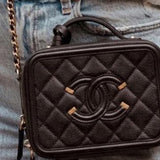
Vintage Chanel bags from the 1980s and 1990s carry a visibly deeper, warmer gold tone than most post-2000 production, and the reason is construction: those years used gold-filled hardware, while the early 2000s shift to mass production brought thinner gold plating. Here is what changed, what is actually verifiable by year, and how to inspect hardware before you buy.
Was vintage Chanel hardware real gold?
The honest answer: most of it was gold-filled rather than solid gold. Gold-filled means a thick layer of gold bonded to a base metal, measured as a meaningful percentage of the piece's total weight, which is why the finish is deep and durable. Some rare and special pieces are described as solid gold in collector lore, but the consistent, verifiable difference is not solid versus plated. It is gold-filled versus plated, and that single change explains almost everything you notice when comparing eras.
Gold-filled vs gold-plated: what is the difference?
| Gold-filled (1980s to 1990s) | Gold-plated (2000s onward) | |
|---|---|---|
| Gold layer | Thick, bonded, percentage of total weight | Micron-level plating |
| Tone | Deep, warm gold with patina over time | Brighter, more reflective, lighter tone |
| Wear | Ages gracefully; rarely chips | Can fade or chip with heavy use, exposing base metal |
The Chanel edit
Shop Chanel
What changed in the 2000s?
Chanel's growth in the early 2000s, including demand from new markets, required faster and larger production runs. Plating is cheaper and quicker to apply than gold-fill, and the house moved to it on most lines. The hardware stayed high quality by ordinary standards; it simply lost the depth and the durability that made the older finish distinctive.
Why vintage pieces still feel different
- Weight: older clasps and chain links feel denser in hand;
- Colour depth: the deep gold reads as jewellery rather than trim;
- Patina: gold-filled hardware softens over decades instead of flaking;
- Craft context: the hardware era sits inside Chanel's handmade-heavy production years, a detail collectors pay for.
How do you check hardware before buying?
- Look for chipping or dull patches at the highest-wear points: chain edges, the clasp corners, strap grommets;
- Check that the chain, clasp and eyelets share the same tone; mismatched tone can mean replaced hardware;
- On vintage pieces, expect a soft, even patina rather than mirror shine;
- On modern pieces, budget for eventual plating wear; it is normal, not a defect if disclosed;
- For a high-value vintage buy, get a third-party authentication and hardware assessment in hand.
Are modern Chanel bags less durable?
On hardware, yes in one specific sense: plating is mechanically thinner and shows wear sooner than gold-fill ever did. Leather and construction are a separate debate where vintage versus modern is taste, not fact. Judge each era on its own terms, and let condition and provenance decide.
Frequently asked questions
Is vintage Chanel hardware real gold?
Mostly gold-filled rather than solid: a thick bonded layer of gold over base metal, which is why the finish lasted decades and still shows a deeper tone today.
Are vintage Chanel bags better made?
The hardware era was objectively more durable, and vintage pieces benefited from more hand finishing. Whether they are "better" otherwise is a matter of preference.
When did Chanel change to gold plating?
The shift happened in the early 2000s as production scaled. Exact transition dates vary by line, so date by style and season rather than a single cutoff.
Do modern Chanel bags wear faster?
Plated hardware can chip or fade sooner under heavy use. With care and rotation, modern pieces still hold up well.
Learn what the 2021 microchip changed, see how hardware factors into the iconic Chanel ranking, or browse authenticated vintage Chanel and more at Luxe Du Jour.