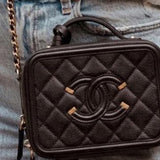
Tammy Phan started Luxe Du Jour in her parents' basement, selling her own designer bags and her friends' bags on Instagram. She ran the business without a website for the first five years, and spent zero dollars on paid ads for the same stretch. The secondhand luxury market is forecast to reach 68 billion dollars by 2028, and this is the playbook she built.
What should you know first?
Phan is honest about the beginning: "Truthfully, when I started Luxe Du Jour I had no plan. I didn't know anything about business and had no guidance or support." She listed bags on a free platform, delivered obsessive customer service, and searched the internet for every answer.
Her advice for anyone following: start with passion, not dollar signs. "My passion for designer luxury sparked even more when I discovered my Chanel bags I bought years ago could sell for more than what I originally got it for!" That fascination became the engine of the business.
The eight stages that built Luxe Du Jour:
- Passion. Pick a category you would follow without a paycheck; it carries you through the hard stretches.
- Plan. Define your fee structure, audience, brands, selling platform, competitors and competitive advantage.
- Supply. Without constant quality intake, no other part of the business can work.
- Authentication. Make it a core value, because reputation is the business.
- Marketing. Choose where your brand shows up and build a community there.
- Operations. Keep overhead low, then delegate in the right order.
- Customers. Turn every client into a referral source.
- Repeat. A business becomes a company when it is repeatable.
Her one recommendation: find a mentor. "If I had a mentor or a guide it would have helped me even more."
How do you find supply?
Supply decides growth. Phan compares a resale business without fresh inventory to a grocery store that never restocks: customers stop coming back. Four channels keep items moving:
- Find individuals who want to consign, through advertising, networking or partnerships with fashion influencers;
- Work with wholesalers and companies whose pricing leaves room for your markup;
- Partner with established resellers and cross-list their items on consignment if capital is tight;
- Join a wholesale program like Luxe Du Jour's B2B offering, which gives resale businesses access to authenticated inventory at bulk pricing.
Quality control matters as much as volume. Early on Luxe Du Jour accepted items in any condition, which Phan says led to problems and disappointed clients; intake now stops at an 8/10 condition rating or better.
The LDJ edit
Shop the latest finds


How does authentication work?
"Authenticity should be your company's core values and words to live by," Phan says. The logic is commercial: nobody swipes a card for thousands of dollars without certainty, and one replica can undo years of reputation.
Luxe Du Jour inspects every item in house, reviews it under a microscope through Entrupy, and then runs a third-party authentication check. The promise created by that protocol is a lifetime guarantee of authenticity, and every purchase can include a certificate of authenticity.
"We would never want any of our clients to have a doubt in their mind when it comes to authenticity," Phan says.
When do you expand?
Start lean. A pure consignment model means you never buy inventory, which is the lowest-risk way to launch; a buyout model ties up capital but attracts sellers who want instant payment. The startup kit is modest: lighting, a photo setup, a mannequin, shipping supplies and a computer.
Phan did every job herself at first. "When I was starting off I was in every role and I was working 12 hours a day but boy, was it ever fulfilling," she says. Growth forced the difficult part. "It became very hard to delegate and move away from roles I loved so much but I knew it had to be done in order to grow and scale the company." The roles to fill: shipping and receiving, customer service, authentication, photography and administration.
Marketing can stay organic longer than most founders expect. Luxe Du Jour spent nothing on paid ads for five years, built a community instead, and converted friendships into referrals. When operations run cleanly, expansion follows: new categories, locations and a wider online presence.
The customer standard comes from Phan's own experience: "I remember what it was like walking into a Chanel or Hermes boutique wearing no makeup and sweats. No one wanted to help me." That memory became Luxe Du Jour's service promise.
Frequently asked questions
Do you need a business degree to start a consignment business?
No. Tammy Phan is a high school dropout with no business degree. She learned from free online resources, business books and endless customer feedback.
Should you sell to a reseller or start your own business?
Both paths work. Selling to a reseller like Luxe Du Jour pays fastest; starting your own business means solving supply, authentication and marketing yourself.
What condition should you accept?
Take only items rated 8/10 or better. Accepting every condition created early problems for Luxe Du Jour, so it narrowed intake to protect the customer experience.
If you would rather sell than build, start with how to choose the right consignment store. On the buying side, our sourcing service can find rare bags, and you can browse the latest authenticated arrivals now.
The LDJ edit